Brooklyn & abroad Open Calls Support CPR

About CPR

A home for artists and curators who don't always get an easy way in.

Two programs, one question: how do you get into a room you were never introduced to?

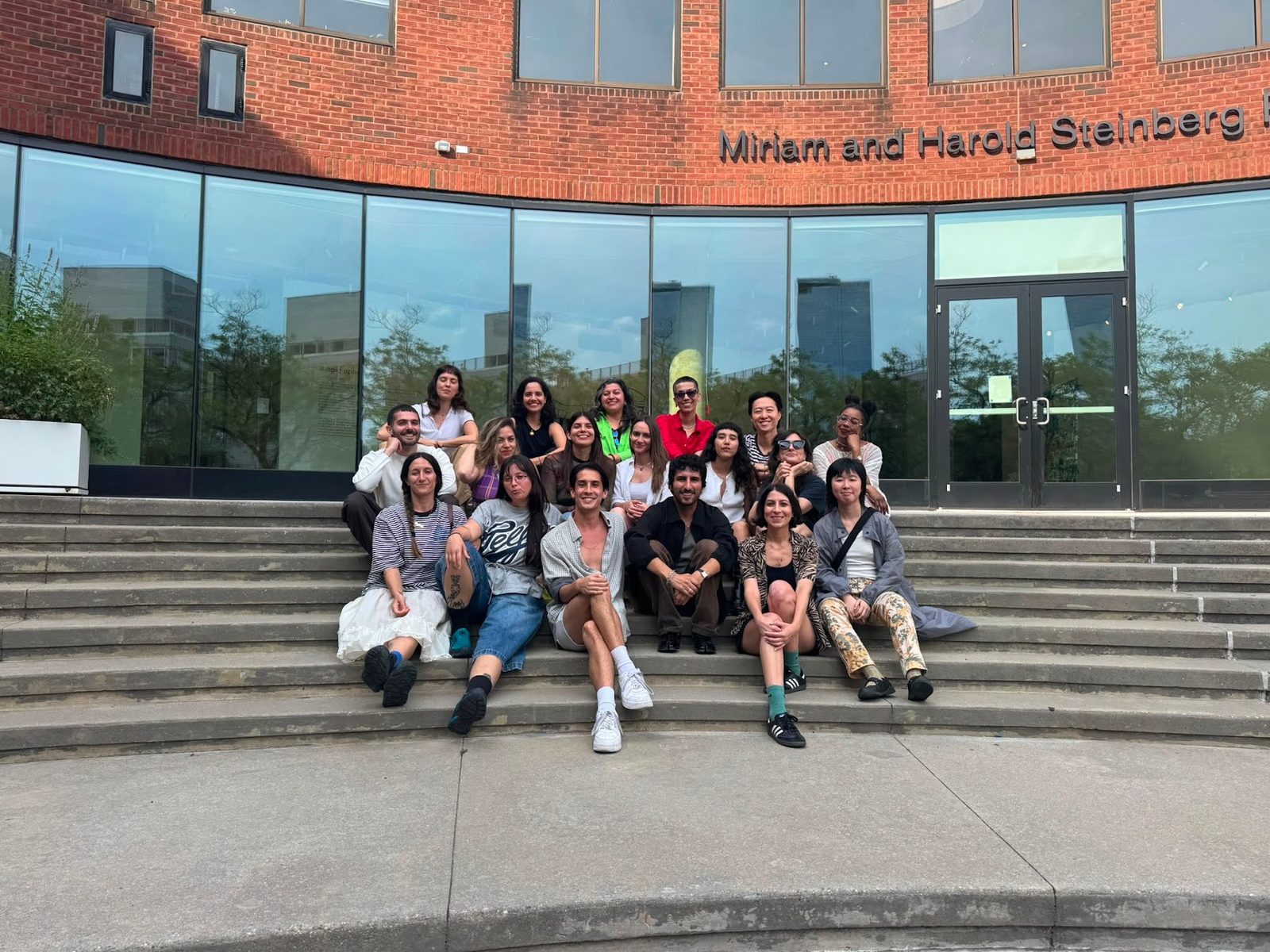
A CPR cohort together on the steps of the Steinberg Center

The story

Two halves, one problem.

Since 2015, CPR has been building a home for artists and curators who don't always get an easy way in. With fully-funded programs and continuous elevating platforms, we create a socially-conscious network of underrepresented and underserved artists and curators that connects with art scenes around the globe — because access to opportunity, knowledge and community should never depend on where you come from or what you can afford.

The Nomadic — our curatorial residency, established in 2015 and formerly called the Core Program — is fully funded and implemented globally, bringing curators together for a shared journey of research and discovery across cities, cultures and art communities. It remains our signature.

In 2019 we established Hello New York!, a fully-funded residency for artists who have recently relocated or are planning to relocate to New York City, with a focus on the city's LatinX community. It connects participating artists with local art professionals, resources and relationships — and it is now an equal half of our work, and the half growing fastest.

Both are selected through an open call, free to attend, and built around the people who take part — not just for the duration of a residency, but as the beginning of something lasting. 158 artists and curators have been CPR fellows since 2015: 86 curators through The Nomadic, 63 artists through Hello New York!, and 9 through Special Projects.

Our mission

Talent should decide who gets a seat in the art world — not privilege, not connections, not where you happen to come from.

That belief is why every CPR program is fully funded, open to all, free to attend and selected through an open call: so that underrepresented and underserved artists and curators can step into the people, institutions and opportunities that shape a career.

Our vision

A future where opportunity in the art world is shared by everyone who has earned it.

Not just those with the geography, wealth or connections to access it easily. We imagine an international art ecosystem built on equal access: where underserved artists and curators have the knowledge, the resources and each other to research, network and build.

A note from our Director and Founder

Eleven years in, what's endured is the friendships.

2025 marked the tenth anniversary of our organization. So let’s begin where it began, ten years ago, in 2015.

I had just moved to the Midwest, away from the bustle and energy of New York City. Now I suddenly felt alone and isolated—connected only to the people whose emails were stored in my phone. I was living in a cold, generic-looking apartment building, the sort of building that could exist anywhere and reflected no character whatsoever. In this new city everything seemed distant, cold, prepackaged.

But that isolation got me thinking: what was I longing for? It was not the city; it was not the weather: it was the people. I sat down and sent an email to colleagues around the world, asking them to help me build an international platform for curatorial research. I needed to feel the warmth of life, to be connected to others, and it turns out, so did they.

Read the full letter

Today, the program we created—the Curatorial Program for Research, or CPR—is a renowned international organization that broadens access and offers equal opportunities to arts education. It provides professional development and research residencies for people who recognize the value of this work. In ten years, we’ve had many trials and errors, some failures but many successes. What has endured through it all are the friendships—the human connections.

One of my fondest memories is still that journey we took in September 2016, during CPR’s third residency program. There were nine of us, all crammed into a minivan, traveling 800 kilometers from Kiev to Warsaw. When we reached the border, the government troops stopped us, made us get out, and proceeded to inspect every millimeter. Were they looking for artillery and explosives? What they found were paperback copies of artists’ catalogues. We were a group of international curators from Sweden and Argentina, South Africa and Peru, Colombia, Italy, Spain, and the United States. What could such a group be planning? It took hours before they finally decided we were not a threat.

It may be obvious to say, but the great and powerful thing that endures from an experience like that is the human relationships we forge under pressure. The nine of us in that minivan got to know each other very well—very well! And on that trip I met someone who changed the course of my life: Susanne Ewerlöf. Back then she was a resident of my program; now she is the Europe Director at CPR. She is my colleague, my co-director, but most of all, I am honored to call her my friend.

After a decade of producing residency programs around the world, I have come to realize that the most important element of our programs are the human connections. That has always been, and always will be our focus at CPR. Susanne and I could be considered what Brian T. Edwards and Driss Ksikes call organic connectors: “agents that navigate in fluid modernity, forced to adapt continuously to maintain human relations.”

It is a common misconception that a creator works in isolation. Only a misanthropic few are truly isolated. Human beings are inherently relational. Yet this perspective is often lost in most collaborations, which prioritize output over relationships. To me, a long list of professional achievements is less significant than a genuine human connection. Friendships with others who share a passion for the arts are ultimately more valuable than any professional outcome. In fact, friendships are fundamental; professional achievement flows from them.

Our programs at CPR offer residents the chance to engage in meaningful interactions with other individuals, rather than thinking of the others solely as artists, curators, journalists, gallerists, or directors. We achieve this because each program is tailored to the specifics of its people, their culture and their locality: from Scandinavia to the Global South, from the perfectly paved highways of Europe to the dirt roads of South America. An artist elevates a particular place at a particular time, and it is those artists that we elevate in turn.

During our second decade, our residencies will offer a space to build on the human connections our fellows are searching for. There is no outcome expected. CPR will focus on fostering a space to meet and to experience how time passes with other human beings. Creativity, we trust, will follow.

I want to thank everyone who has participated in one way or another in our programs. And a big thank you even to that cold, generic-looking city in the Midwest, because after driving around your wide, empty streets, I ended up forging life-long friendships as well.
Carmen Ferreyra · Director & Founder

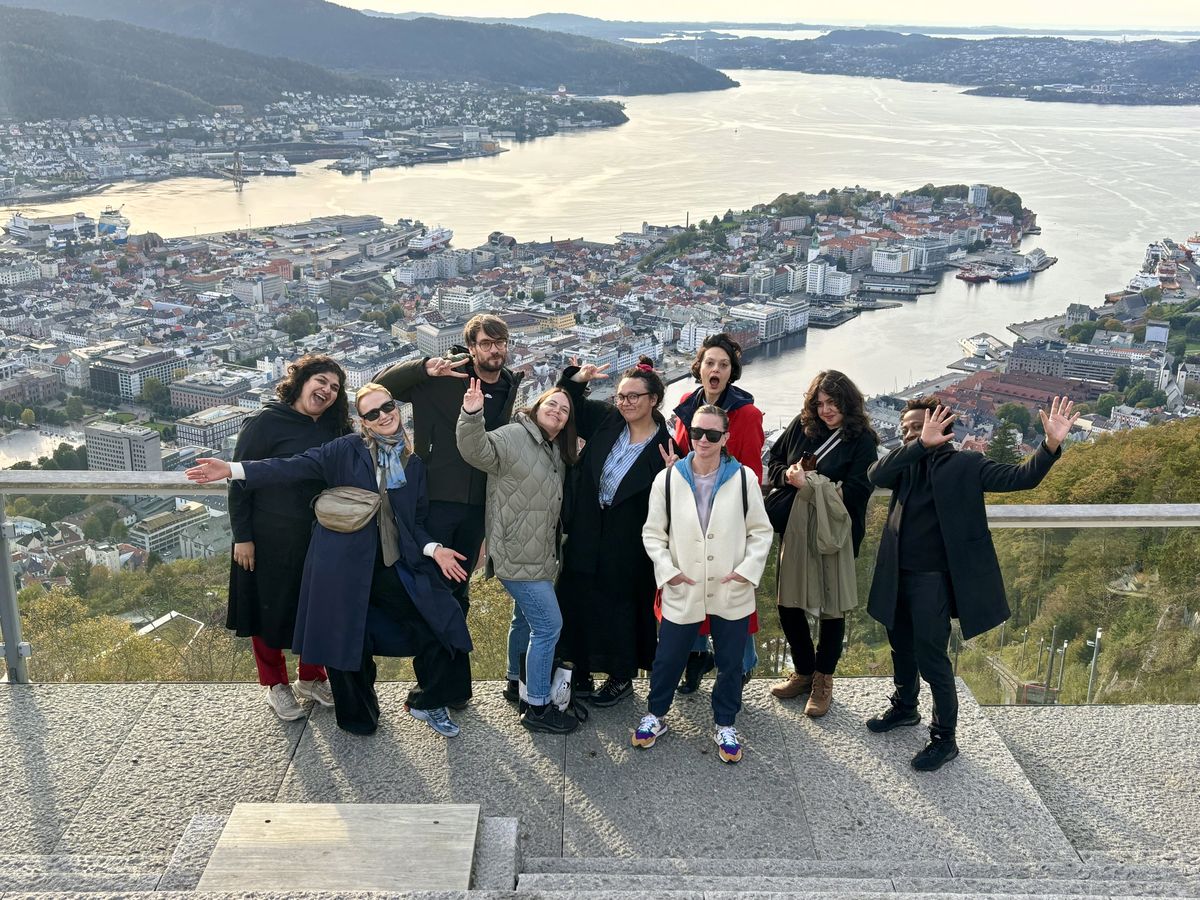
CPR fellows on a research trip to Bergen, Norway
CPR's Nordic edition, Bergen, Norway — The Nomadic, 2023–24.

Who runs CPR

Team.

Carmen Ferreyra

Carmen Ferreyra

Director & Founder

Independent curator and art producer based in Brooklyn, with an MA in Critical and Curatorial Studies from Columbia (2013) and a BA in Art History and French (2010). She lectures on gender, politics and Latin American art at SVA and Bronx Community College. Previous roles include Special Projects Coordinator for the Armory Show, Director of Special Programs for Bienal de las Fronteras, and Director of UNTITLED. Art Fair; she has also served as acquisition advisor and research consultant for institutions including the Guggenheim, the Whitney and El Museo del Barrio.

Susanne Ewerlöf

Susanne Ewerlöf

Director, Europe

Curator and artistic researcher pursuing a PhD at HDK Valand focused on forgotten ancestral knowledge among Forest Sámi communities and colonial memory erasure. She holds an MRes in Curatorial/Knowledge from Goldsmiths and an MA in Curating from Stockholm University, and has curated at Bonniers konsthall, Tensta Konsthall and Norrköping Art Museum. A CPR alumna since 2016, she has since collaborated on exhibitions at CPR².

Natasha Marie Llorens

Natasha Marie Llorens

Interim Director, Europe

Professor of art theory at the Royal Institute of Art and co-chair of the Center for Art and the Political Imaginary. She writes on North African and Middle Eastern contemporary art, feminist and queer politics, and decolonial curatorial practice, contributing to e-flux Criticism.

Natalia Viera Salgado

Natalia Viera Salgado

Curator, New York

Puerto Rican curator and curatorial consultant based in New York City, and founder of :Pública Espacio Cultural, an independent art space in Santurce, Puerto Rico. Her research concerns decolonial practices, architecture, and social and environmental justice. She has worked at the Institute of Puerto Rican Culture, El Museo del Barrio, Art in General, Socrates Sculpture Park, The Nathan Cummings Foundation and Americas Society, holds an MA in Curatorial Practice from the School of Visual Arts, and is currently Associate Curator at the National Academy of Design and a curatorial resident at the Abrons Arts Center.

How CPR is funded

Where the money comes from.

CPR raises the full cost of every program. There is no endowment and no earned revenue from participants: residencies are paid for by public arts agencies, private foundations and national cultural institutes, edition by edition, and topped up by individual gifts.

That is why the supporter list matters more than a logo strip. Each of these agencies reviewed CPR's work through a competitive process before funding it, and several have funded more than one edition.

See the full supporter record

Legal status

Curatorial Program for Research is a registered 501(c)(3) nonprofit organization, EIN 47-3779481. Contributions are tax-deductible to the extent permitted by law.

Support CPR

Every program we run is free to attend.

CPR's residencies are paid for by public arts agencies, foundations and people who believe access to the art world should not depend on who you already know. If you would like to help keep that true, consider making a gift.